Smile for the Camera? Not Until You Made Peace With What It Sees
Guest Blog Post
By Hana Kabele Gala
Oh no, time for new headshots again. Whether they’re for your website, LinkedIn glow-up, or those fresh business cards you’ve been meaning to print, the whole idea probably already has you feeling a familiar knot in your stomach. Hours with a photographer, followed by the inevitable scroll through photos that make you miserable.
Yep. There’s that nose (too small? too big?), the extra softness around the middle that the camera loves to highlight, the wrinkles or asymmetry you’ve made peace with in the mirror but can’t ignore in print. Should I ask the photographer to smooth things out, or will that make me sound vain? We’ve all been there.
Here’s the newsflash you didn’t ask for: the dread isn’t really about the pictures themselves. As is often the case, the thing is never the thing. What’s actually gnawing at you is the fear that the camera doesn’t lie. Because, well, it doesn’t. If your eyes look tired or disconnected, the lens will call it out. Just like you can hear a smile over the phone, the camera captures whether there’s inner light or just a performance. The real worry isn’t the final files. It’s being truly seen and being seen in the way you want to be seen.
The camera has an almost surgical way of exposing two stubborn gaps. First, the gap between how you see yourself and how the world actually sees you: that raw confrontation with external reality. Second, and often deeper, is the gap between how you see yourself and how you truly feel about yourself on the inside. That internal friction shows up instantly in the frame: tense shoulders, a smile that doesn’t reach the eyes, the subtle “I don’t want to be here” energy that no amount of good lighting can fully erase.
I’ve sat on both sides of the camera: working with photographers and with many clients, navigating the same territory. The patterns repeat. It starts with how the clients talk about themselves. Show them the first takes, and their reaction often sounds like this: “Oh Gosh, look at that flabby arm! This dress is not very flattering.” Maybe they joke: “How about I just hide behind that plant completely?”
What they’re doing is letting their incessant inner critic escape their head.
Here’s the thing: Plenty of people with symmetrical features and disciplined workout routines still produce guarded, flat images. Meanwhile, some of the most magnetic photographs come from those whose bodies don’t check our current beauty standards at all. The difference isn’t perfection. It’s congruence. It’s knowing who you are in this season of life and not being at war with it.
Imagine two clients with a similar face and body. One shows up carrying the weight of “I never had the supermodel face, and after kids and turning forty, it’s hard to feel comfortable. Let’s just get it over with.” The photos come back hiding, apologetic, dim. The other woman shows up with the energy of “Yep, this is me. I carried babies, I built a business, I’m in my fifties, and I love the life I’ve created. Let’s capture that.” The photos radiate warmth, joy, and quiet power. Same body type, different internal states. The self-acceptance transmits. The camera truly does not lie.
A great photographer gets this. She knows the technical side is only a part of the job. The real craft is creating safety so the guarded layers can soften. My friend Pavlina, who moved from national TV to media consulting, excels in this, and I learned a lot from her about designing the right environment for my clients. Her sessions are labeled as “media training,” but what she’s really quietly doing is the deeper work on those two gaps. One of her excellent tools is deceptively simple: instead of plunking someone stiffly in a studio chair in front of the camera, she makes them draw a picture. The only requirement is that they must include themselves. And when the page fills with trees, clouds, and rainbows, but you need a magnifying glass for the tiny stick figure in the corner, that’s when the real conversations begin.
A great photographer will talk to you about your business, what makes you excited about it, why you started it in the first place. It’s not some filler chatter. It shifts and calms your nervous system, so the eyes sparkle and the posture relaxes naturally.
If you’re staring down a headshot session and feeling the resistance, the practical path forward is simpler than it seems.
- Choose a photographer whose work and energy you trust. Ask around, look at their portfolio, read how they describe their process, and notice the vibe in the images they create. Be upfront about your insecurities; the right professional has heard it all and knows how to work with it.
- Most importantly, reconnect with why you’re doing this. You run a life, a business, a family. That substance is already there. You already have the receipts for plenty of things you can be proud of. Lean into that.
- Remember that the camera picks up on your inner state. Treat the session as a small act of showing up as you are. I actually love visualizing how the camera communicates exactly what I’m thinking, so I always have some grounding phrase when the shutter clicks. It needs to be something true to my energy. You will come up with your own and then repeat it yourself when the camera flashes. It could be something like: “This is me and my work,” or “I’ve earned to be here,” or simply “let’s go!.” It works because it pulls the right expression to the surface. It works because it aligns with what’s already real. Think of iconic shots of people who owned their presence not because they were flawless, but because they felt safe enough in the moment to let the real self shine through.
The best photos are rarely the most “perfect.” They’re the ones where the people inside the frame stopped fighting the mirror and simply let themselves be seen.
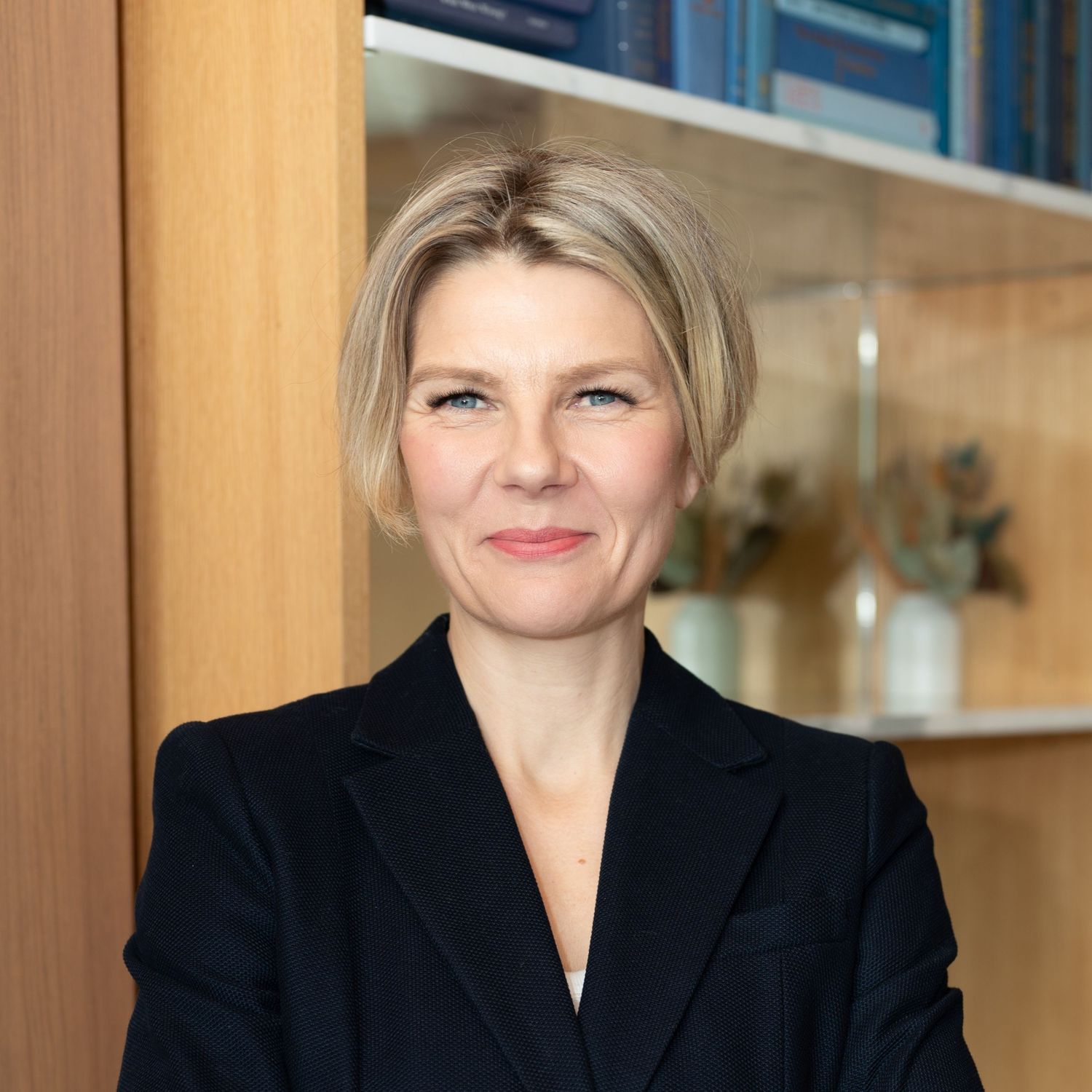
Author Bio
Hana Kabele Gala, PhD. runs a private neurocoaching practice in Seattle. She works with high-achieving overthinkers. Her approach targets the subconscious beliefs that keep accomplished people stuck despite doing everything “correctly.”
When she isn’t working, Hana writes for her Substack, reads Russian literary giants, and carpools a bunch of teenagers.
Note from Kristina
Understanding where our mental blocks are coming from is very important. Not everyone is ready to see themselves in photos. I do ask questions like "How comfortable are you in photos?", "Have you had professional photos taken of yourself?". There are some red flag answers that tell me you're not ready for me and you need to talk to someone like Hana before a photoshoot.
The header photo is of me and I can point out my flaws like you can see my grey hair, some of the lines on my chin aren't my favorite, I wasn't able to get into my eyebrow threading appointment before these photos and had to DIY and I've definitely got more eye wrinkles than I used to. This is a closer crop photo so you can't see the weight I've put on because of my thyroid issues that I'm working on. I picked up the camera because if I was the one who knew how to use the fancy camera then I would also be the one taking the photos and never be in photos.
I am constantly pushing past my insecurities every time I post a photo or do a video on Instagram. I tell myself "The people who want to see me don't care about my insecurities, they want to know I can support them." The people who have been following my video journey cheer me on every time.
It is important to move through our personal photo insecurities and I do highly recommend doing work with someone who can guide you through this.